
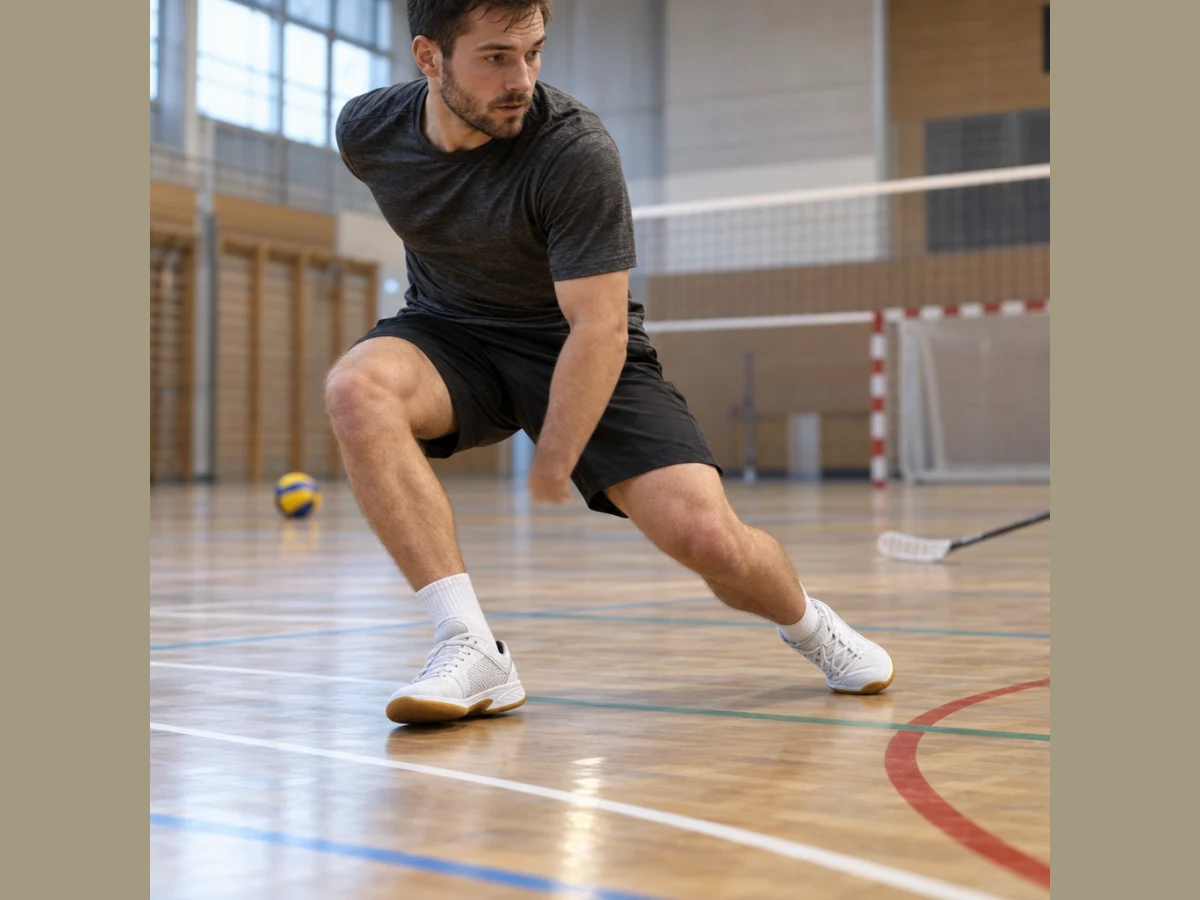
A floorball change of direction, volleyball landing, handball stop and badminton lunge place different demands on a shoe. The same look or shared label of ‘indoor shoes’ is therefore not enough. This comparison will help you decide when to prioritise grip, lateral support, cushioning or flexibility, and whether one versatile pair can combine these priorities. Start with your dominant movement, not the sport name on the shoe.
Four sports, four movement profiles
If you are deciding how to choose indoor shoes, do not start with the category name. List the movements you repeat most often during play. This guide covers common recreational situations, not fixed rules for every player; priorities can vary with playing style.
Movement map for recreational indoor sports
| Sport | Dominant movement | Typical demand | First priority |
|---|---|---|---|
| Floorball | Short accelerations and sharp changes of direction | Frequent stopping and lateral loading | Foot lockdown during changes of direction |
| Volleyball | Lateral movement, take-off and landing | Repeated landings and movement in a smaller space | Balance of cushioning and support |
| Handball | Sprint, stop, take-off and change of direction | A combination of landings, accelerations and lateral loading | Support based on the most frequent playing role |
| Badminton | Lunge, recovery and quick small steps | Weight transfer in several directions | Mobility and control during lunges |
‘First priority’ is the starting point for comparison, not the only feature by which to choose a shoe.
So do not look for the difference between volleyball and floorball shoes only in their labels. The volleyball profile emphasises landings after take-offs, while floorball more often tests acceleration, stopping and changes of direction.
In handball, position alone is not decisive. A player who sprints and takes off frequently may prioritise mobility and the right feel at take-off; a player who stops sharply and works laterally more often may place greater weight on support. Two people in different playing roles may therefore need a different balance of support, cushioning and mobility. What matters is the actual balance of movements, not the position name.
Use this profile when comparing the outsole, lateral support, cushioning, flexibility and foot lockdown. Start with the interface between player and court — the outsole.
The outsole must suit both the surface and direction of movement
Your movement profile shows what the outsole must handle. Separate three questions: is the specific model intended for the surface you play on, does it meet the venue operator’s requirements, and does it behave predictably when accelerating, stopping and changing direction? Check the first two answers in the product information and venue rules, and the third through controlled movement on the relevant surface.
Grip in indoor shoes is not a contest to stick to the floor as strongly as possible. Insufficient grip shows up as unwanted slipping or uncertain weight transfer. Appropriate grip feels predictable: contact with the floor matches what you expect from a step. It is disruptive when the outsole catches more than you want while turning or taking the next step. Control matters, not the maximum.
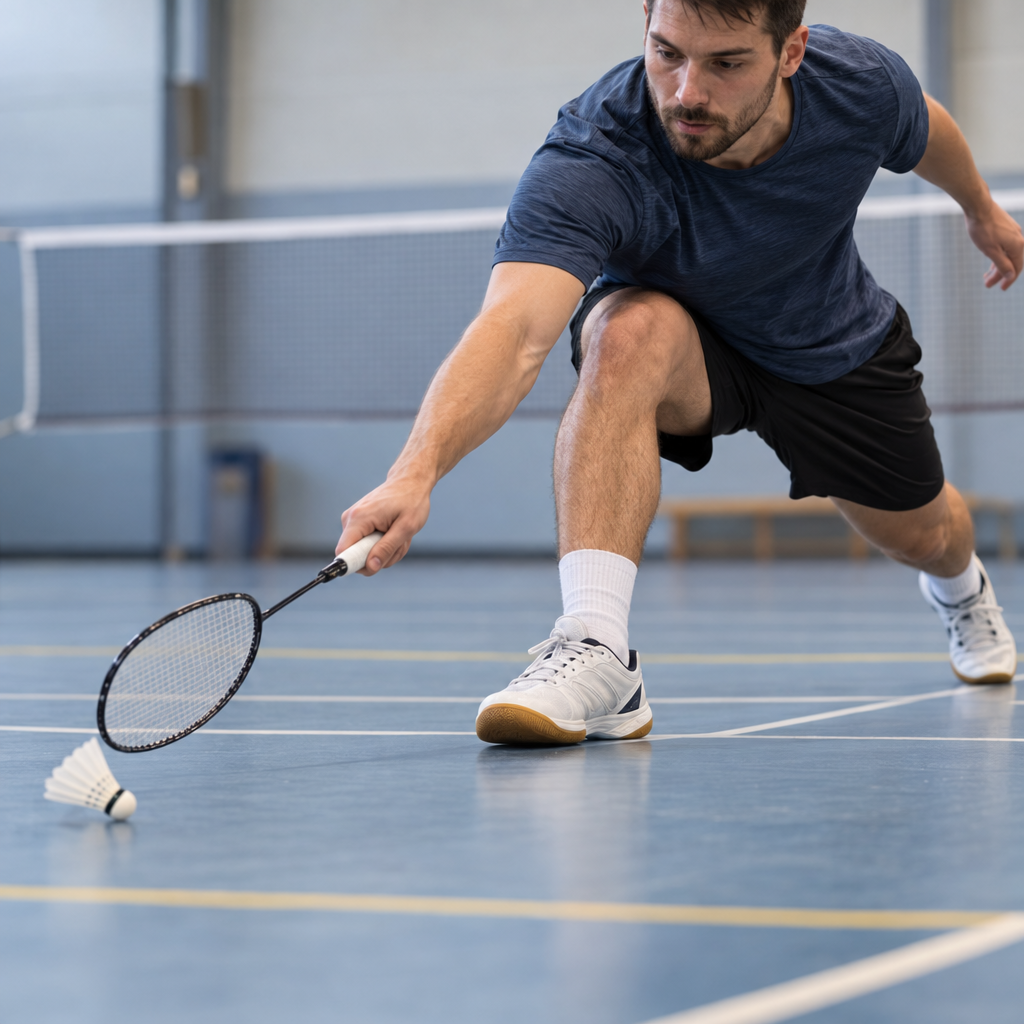
For badminton, test the outsole with a controlled lunge, push-off back and short steps in several directions. A badminton lunge shows how it behaves when transferring weight forwards and recovering, while a floorball stop tests contact during sharper deceleration and a change of direction. In both cases, look for a consistent feel without unwanted slipping or disruptive catching.
The colour, pattern or appearance of the underside does not confirm that an outsole is suitable for an indoor surface. Check the model’s stated intended use and any restrictions in its product information. Then assess whether the shoe keeps your foot in place during lateral movement.
Lateral support comes from holding the whole foot, not collar height
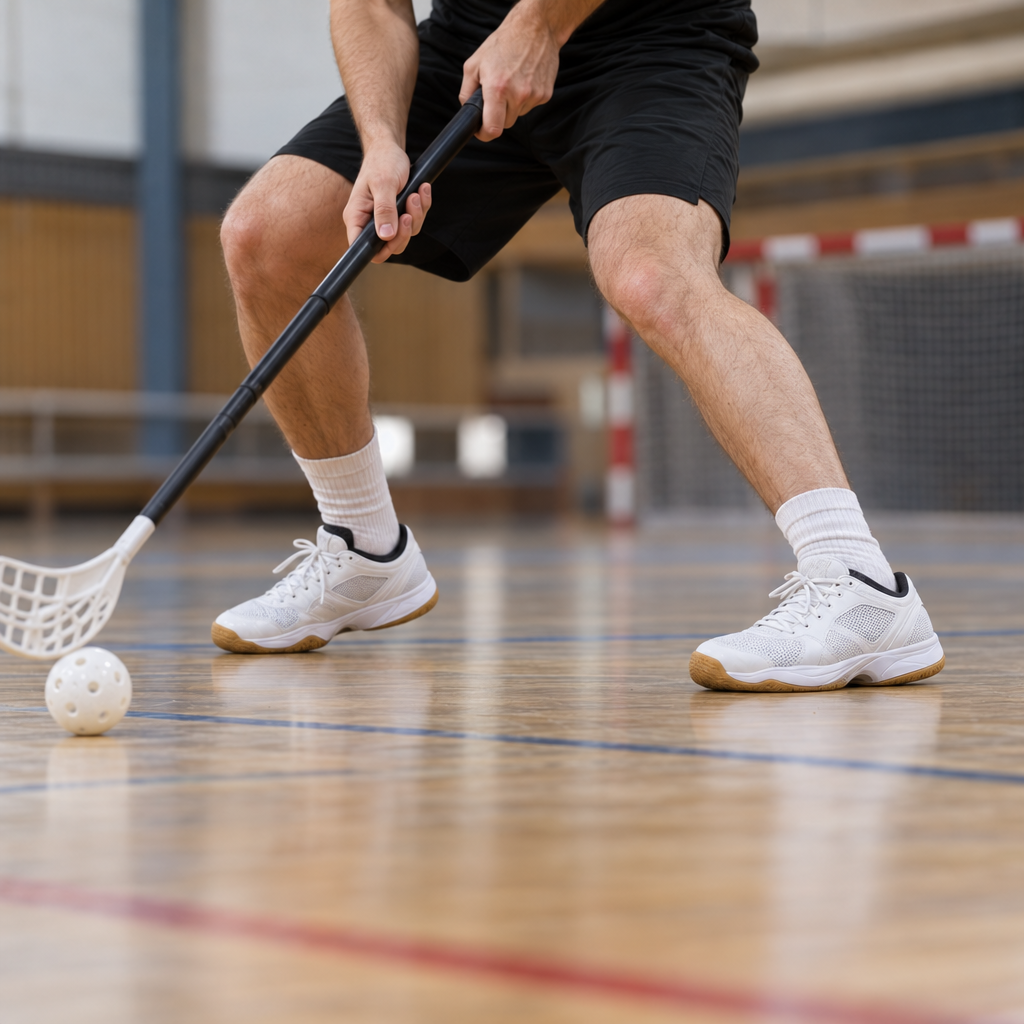
Even a suitable outsole is not enough if your foot moves around inside the shoe. Lateral support comes from the combination of fit, upper construction and lace adjustment. A high collar can alter the feel around the ankle, but it does not by itself confirm lateral stability or guarantee performance or injury prevention. When choosing indoor shoes, ankle stability cannot therefore be judged from shoe height alone.
When trying them on, check four points:
- Heel lockdown: during a lateral step, the heel does not lift noticeably or move from side to side.
- Midfoot: the upper wraps it without loose sliding or pressure points.
- Forefoot: when transferring weight, the foot does not slide sideways; support should not come from compressed toes.
- Lacing: allows you to fine-tune lockdown without overtightening.
Take a controlled lateral step and stop briefly. Check whether your heel lifts, your foot shifts sideways or the shoe responds with a delay. If the outsole stays in place but your foot continues moving inside, the issue is not grip but shoe lockdown. Support should be even and comfortable, not created by painful constriction. If you have to rescue it with tight lacing, the fit is probably wrong.
Once the heel, midfoot and forefoot all stay securely in place, you can compare the character of landings and take-offs.
Cushioning, flexibility and weight: where the ideal compromise changes
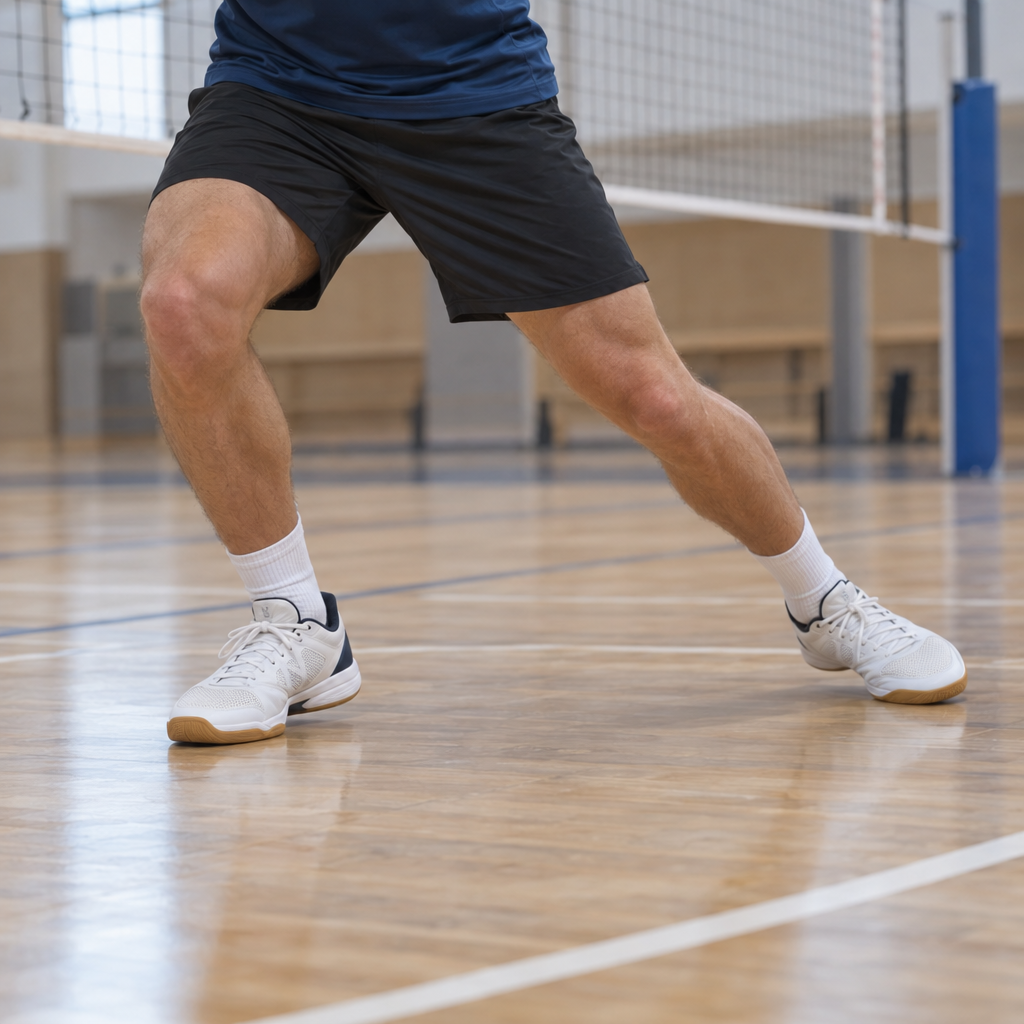
Once the shoe holds your foot during changes of direction, pay attention to landing and take-off. Do not assess cushioning, flexibility and weight separately. A softer feel can make landings more comfortable, but reduce direct contact with the floor. A firmer feel is more direct, but some people may find the foot strike hard.
For repeated volleyball take-offs and landings, cushioning in volleyball indoor shoes may be a higher priority. A recreational volleyball player may want a more comfortable landing, but not a soft feel during lateral movement. The aim is therefore not the maximum, but a level at which landings feel comfortable and movement remains predictable. The same shoe may feel too soft or too hard to another player.
In floorball and badminton, the lightness and flexibility of indoor shoes show up in a series of short steps, a lunge or quick recovery. However, the low weight of indoor shoes alone does not guarantee the right feel. A very flexible pair may feel agile but offer less support than expected; a more substantial pair may be more comfortable on landing but less immediate during footwork.
For handball, return the decision to the balance of take-offs, landings, stopping and changes of direction. With more frequent take-offs, cushioning may become more important; when stopping and working laterally, the balance of contact, support and mobility will matter more. If you play regularly, give more weight to the movement you repeat most often.
Assess the features as one package: gains in softness, low weight or flexibility can change both support and your perception of the surface. This compromise must also suit the shoe’s length, width and shape.
The right size is not just length: last shape matters too
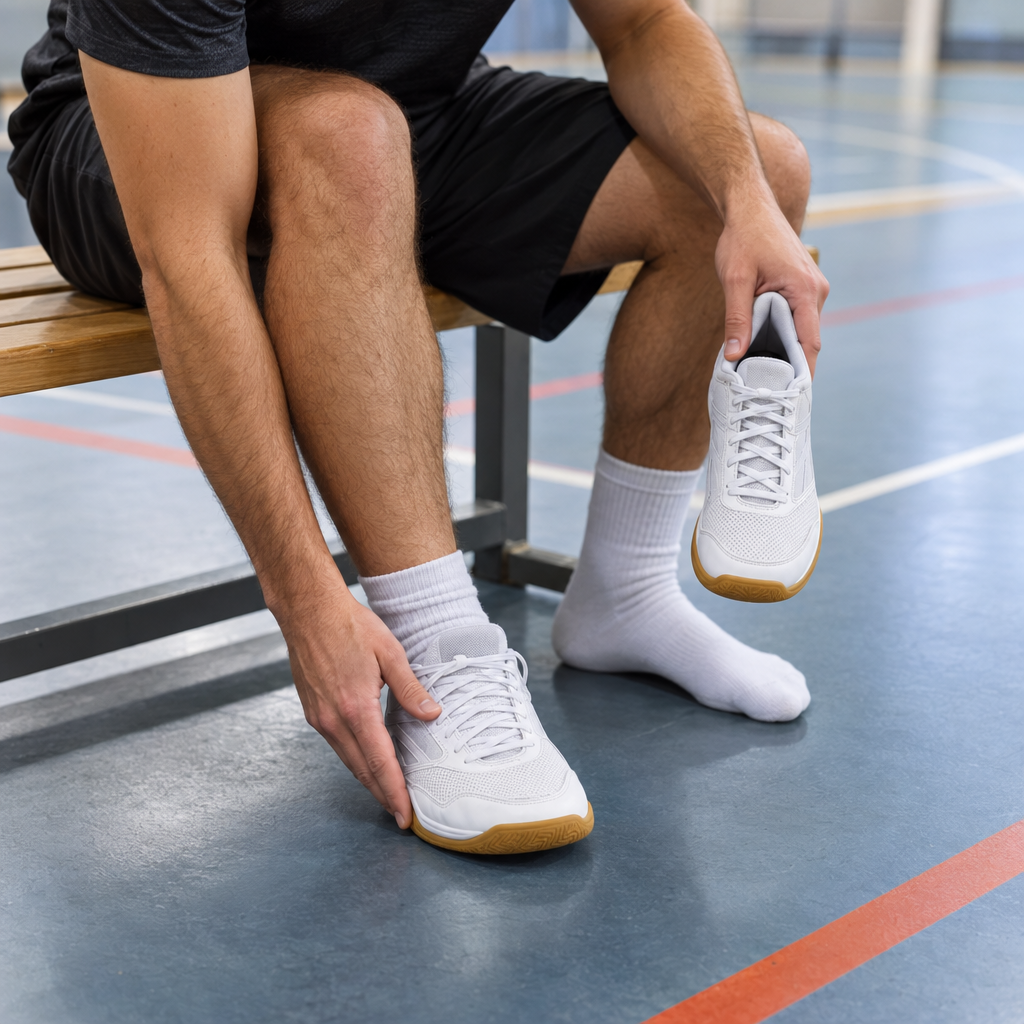
No functional compromise will help if the last does not match your foot. The right shoe size for indoor sports is therefore not just the number on the label: it must address length, width, forefoot shape and heel lockdown at the same time. Try shoes on in the socks you use for play and on both feet; judge the result by the foot with the worse fit.
- Toes: There should be adequate space in front of them without the foot sliding forwards. Toes should spread naturally and must not hit the front or feel pressure from above when the foot flexes.
- Width: The widest part of your foot should roughly align with the widest part of the shoe. Side pressure, the foot pushing over the edge of the midsole, or compressed toes point to an unsuitable shape.
- Heel: It should stay in place without significant lifting, but not at the cost of painful constriction. If you can hold it only by tightening the laces extremely, the fit is probably wrong.
- Material: Pronounced creasing of the upper or excess volume may mean that the shoe is too large or unsuitable in shape.
Two shoes of the same length can fit a wider foot completely differently: one has a tapered forefoot, while the other leaves room for the toes without loosening the heel. If you are looking for indoor shoes for wide feet, compare the width of the last and the toe-box shape, not just the size number.
Do not replace width with extra length. A larger size may ease pressure at the sides, but it also adds room in front of the toes, encourages material creasing and can worsen heel lockdown. Keep only pairs that fit without this kind of compensation for further comparison.
When one pair is enough and when compromises get in the way
After ruling out unsuitable fits, frequency and the nature of movement decide. Your main sport is not automatically the first activity on the list, but the one you play most often and in which you repeat the most decisive movements. At similar frequencies, ask yourself in which situation a compromise in footwear would hinder you most.
Identify one non-negotiable priority : lockdown during changes of direction, feel on landing or mobility in a lunge. Then compare secondary sports by whether they demand a conflicting balance of grip, support, cushioning and flexibility from the shoe. The label ‘versatile’ does not in itself confirm such compatibility. If the main priority is lost, versatility is merely an unfavourable compromise.
No dominant activity: A recreational player who alternates sports about equally often may look for a balanced pair. Versatile indoor shoes for several sports remain an option if they suit the surfaces used, hold the foot securely and do not significantly weaken any important movement.
One main sport: If you play floorball often and volleyball only occasionally, lockdown during floorball changes of direction may take priority. Sport-specific indoor shoes make more sense if a balanced pair weakens this requirement. However, the secondary activity must remain compatible with the footwear’s intended use and features.
The decision therefore rests on conflicting priorities, not on finding a universal winner. One pair is enough when requirements are compatible; a frequent main sport or a pronounced conflict is a reason to favour a more focused option. Finally, verify this choice in the specific shoe.
Final check: on your feet, in the model information and with the retailer
After choosing the type of pair, split your checks according to where each piece of information can be reliably found. Before trying shoes on, write one sentence: ‘I play [sport] most often, mainly repeat [movement], and do not want to compromise on [feature].’ This helps you compare what matters when options are similar.
- On your feet. Try indoor shoes on in your playing socks and assess both feet. In an available safe space, take a controlled step, stop briefly or lunge according to your main movement. Check toe room, heel lockdown, lateral hold and comfort. If you have to rescue the fit by tightening excessively, the model has not passed the test.
- In the model information. The product page should confirm its stated intended use for the surface and sport, outsole construction, and available information on cushioning, flexibility, weight and fit. Also read any restrictions and conditions of use. Do not infer missing information from appearance or the category name.
- With the retailer. Compare only currently displayed information. With the partner retailer, confirm the final price, availability of the chosen variant and size, delivery method and timing, return options and terms and conditions.
Finish the overview with three lines:
- Fits on foot: yes/no + note
- Model information confirmed: yes/no
- Retailer terms checked: yes/no
The order for choosing indoor shoes is deliberately fixed: first the non-negotiable functional priority, then fit and lockdown, and finally verified information and offer terms. Neither the sport name nor an attractive offer should outweigh how the shoe handles your dominant movement. That is what determines whether you need a specific pair or whether a sensible versatile compromise is genuinely enough.