
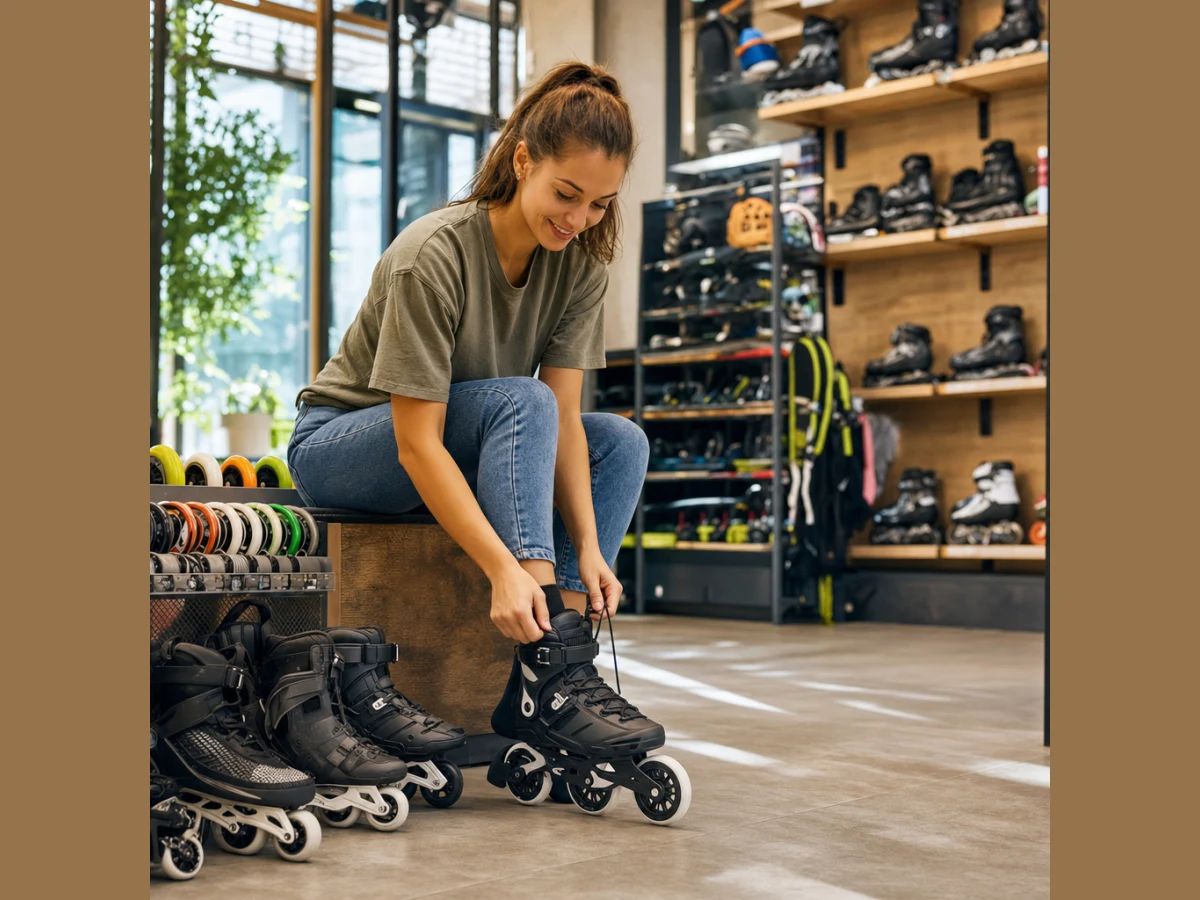
When choosing inline skates, it is not worth starting with the colour or the highest number in the description. Wheels, bearings, the frame and boot size together determine stability, comfort, speed and control. This guide will first help you decide where and how you want to skate, then show you how to read product listings so you can compare models by how they ride, not just by appearance or one standout specification.
First, decide how you will skate
Technical specifications only start to make sense when you connect them with actual skating. If you are wondering how to choose inline skates , start with a simple question: will you skate a few times a month on a cycle path, train regularly for fitness, or want to get around town more quickly?
Experience level: for your first pair of skates, look for stability, predictable handling, confidence when braking and a boot where your foot does not move around.
Surface: a smooth cycle path suits a faster glide. Urban pavements and rougher asphalt place greater emphasis on control, cushioning and grip.
Frequency: for occasional recreational skating, comfort and easy maintenance are often key. On more frequent fitness routes, you will notice efficient glide and power transfer more.
Pace: a more comfortable skate is usually steadier and easier to control, while a sportier one may be faster but requires more confident technique.
A beginner who wants to skate along a cycle path at the weekend will assess the specifications differently from a skater planning frequent journeys around town between kerbs, corners and changing surfaces. When choosing inline skates for recreational skating, do not look for a single “best” specification. First define your style of skating — it will then naturally show which skate category is worth comparing first.
Fitness, recreational or freeskate: which category to compare
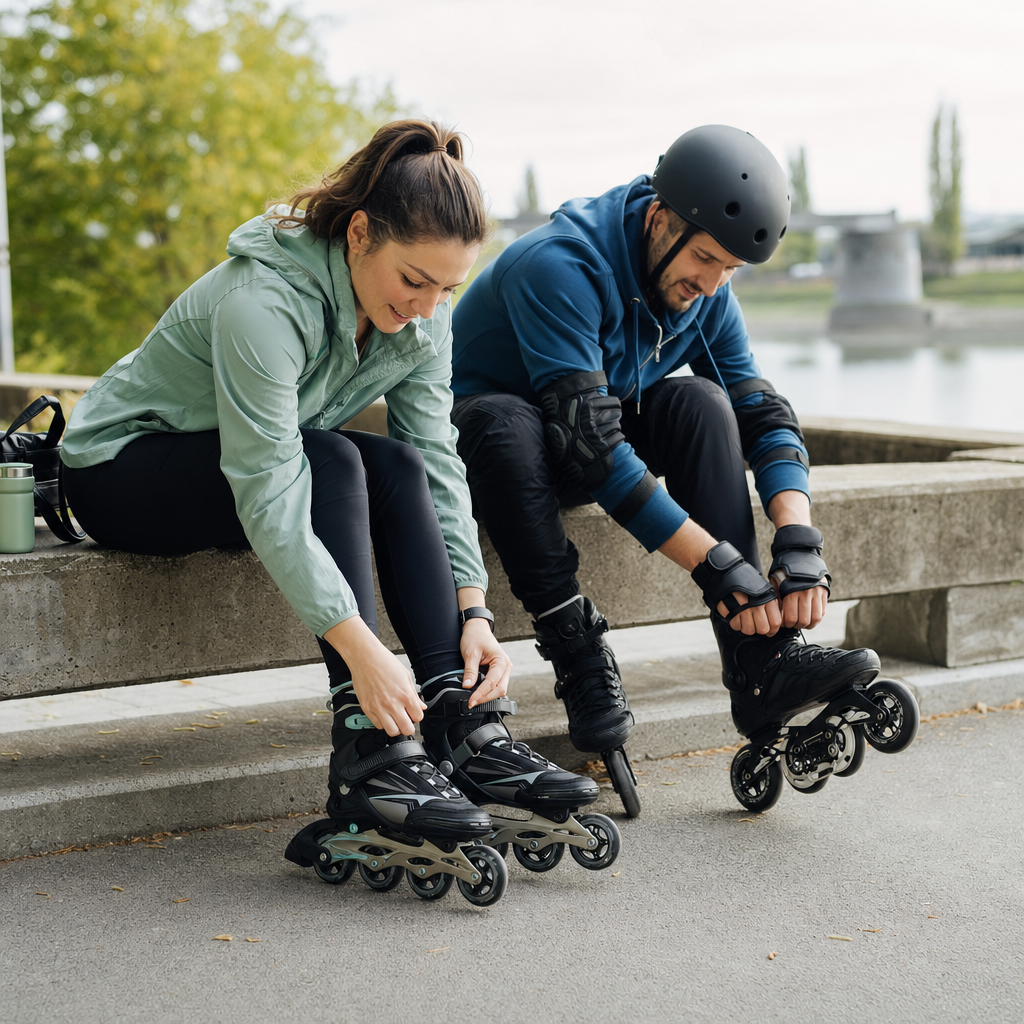
Your answers about where and how you will skate provide the first practical filter: the type of skate. When choosing inline skates for beginners, it is most sensible to start with recreational or fitness inline skates, then consider more specialised options.
Recreational and fitness skates are suitable for comfortable routes, learning technique and fitness skating on cycle paths or in parks. Their purpose is to balance comfort, stability and a smooth push-off.
Freeskate skates make more sense where you frequently change direction, brake, avoid obstacles and skate in town. Their advantage is usually agility and a more secure feel, not automatically easier skating for every beginner.
Sportier models are worth comparing when you already know you want regular longer routes, a higher pace or a more performance-focused ride, and are ready for more demanding handling.
Think of the difference between fitness and freeskate skates in practical terms: a skater on a longer cycle path will appreciate smooth glide and comfort, while an urban skater needs quicker responses, confident manoeuvring and firmer foot support. Neither category is universally better. Each suits a different way of skating.
Treat the category name only as the first way to narrow down your choice. Two skates labelled as fitness can feel different depending on the wheels, frame and boot. After choosing the category, move on to the specification that most visibly changes the character of the ride: wheel size.
Wheel size: stability and control versus speed
Even within recreational or fitness models, inline skate wheel size can significantly change how a skate behaves. Diameter is given in millimetres, and a higher number does not automatically mean a better choice. It mainly means a different balance of handling, acceleration and speed.
Smaller wheels keep the skate lower to the ground, are easier to get moving and usually feel more confidence-inspiring while learning to turn, brake and make slower manoeuvres. They are suitable when you do not yet want to contend with a skate that is too lively or fast.
Larger wheels maintain speed better, roll more smoothly over small uneven patches and feel quicker on a longer straight route. However, they may require more confidence in your balance, more room to control speed and more precise technique.
For relaxed learning and recreational skating, handling and predictable responses tend to matter more. Regular fitness skating may already call for a balanced inline skate wheel size that can handle a comfortable pace and longer glide. A sportier skater who has mastered braking and wants to maintain speed on a longer route may get more from larger wheels.
A typical example: a beginner mainly skates on a smooth cycle path and is tempted by larger wheels for the speed. But if they still hesitate when setting off, turning or braking, it is wiser to leave some margin for control. A faster skate will not help if you do not feel safe on it.
When comparing smaller and larger wheels, do not look only at the diameter itself. Wheel size should be considered alongside frame length, boot type and the skater’s experience. Once the diameter makes sense, check the wheels’ other characteristic: hardness and how it behaves on different surfaces.
Choose wheel hardness based on surface and comfort
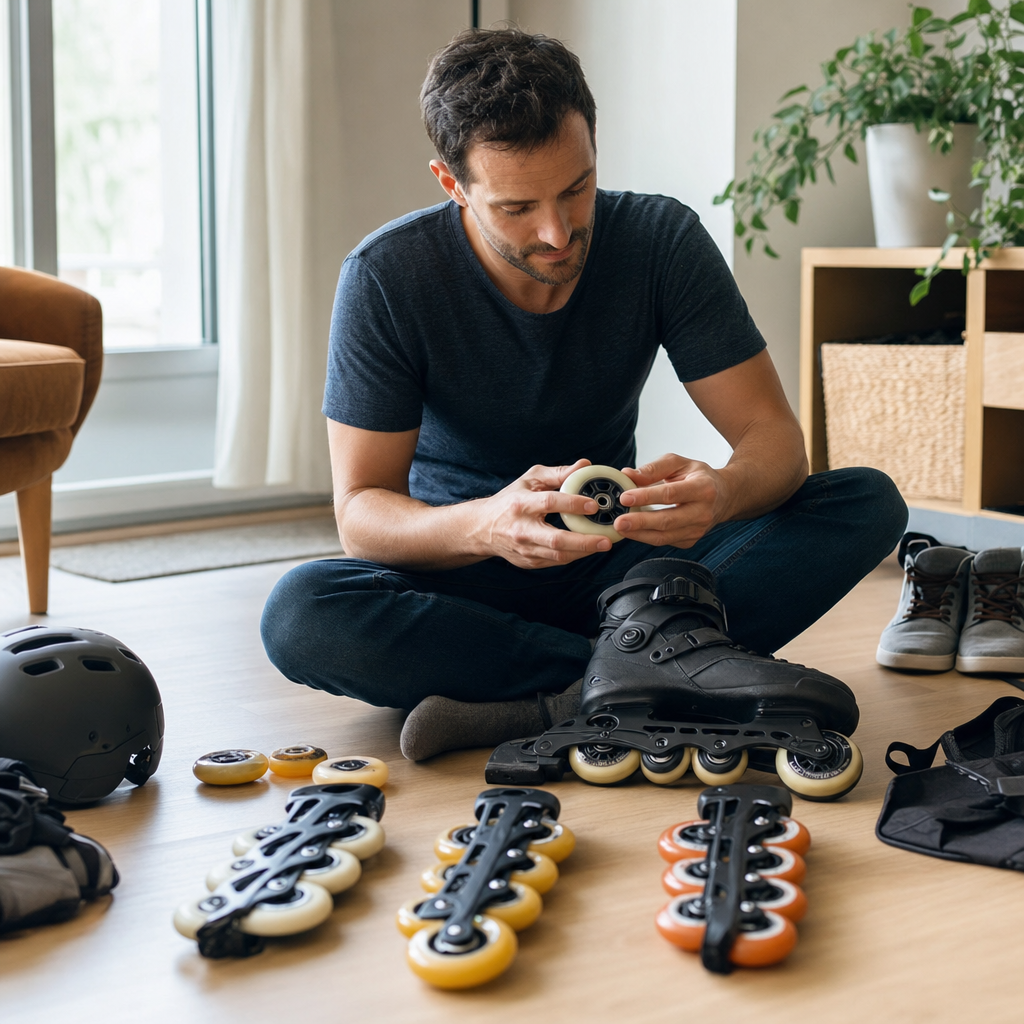
Wheel diameter does not tell you everything. Two inline skate wheels of the same size can feel different on the same asphalt if they have different hardness ratings. This is usually shown as a number followed by A: a lower value means a softer wheel, and a higher value a harder one.
Softer wheels cushion small vibrations better, offer more grip and feel more confidence-inspiring when setting off or turning. Beginners will appreciate them especially on less-than-perfect surfaces, where they do not want to feel every bump through their feet. The drawback may be a slower, less sporty feel and faster wear with more frequent or aggressive skating.
Harder wheels roll faster and lose less energy on a good surface. They can feel pleasantly quick on a smooth cycle path. On coarser asphalt or broken urban pavements, however, they cushion less, transfer more vibration and can reduce your sense of control when your stance is uncertain.
Smooth cycle path: a faster, harder setup can make sense if you already have braking and balance under control.
Typical urban surfaces: look for a compromise. Grip and cushioning are often more important than maximum glide.
Rougher asphalt: softer wheels usually bring more comfort and a calmer contact with the surface.
Do not treat inline skate wheel hardness by surface as an isolated chart. It also depends on the skater’s weight, skating style, speed, boot and frame. Once you know how wheels react to the surface, it is easier to avoid another common shortcut in product descriptions: that bearings alone determine ride quality.
Bearings: a higher rating does not automatically mean a better ride
Inline skate bearings complement the work of the wheels, but they should not overshadow everything else in a product listing. Ratings such as ABEC, ILQ or similar systems refer mainly to the bearing, not the quality of the entire skate. A higher number may look appealing, but on its own it does not guarantee that a skate will be smoother, more stable or more comfortable for a beginner.
Mistake no. 1: choosing by rating alone. If the boot fits poorly, the wheels do not suit the surface or the whole skate feels unstable, “better” bearings will not fix it.
Mistake no. 2: forgetting the skating conditions. Dust, moisture, neglected cleaning or unevenly worn wheels can significantly worsen the ride. After a season without maintenance, even skates with an appealing bearing rating may feel worse than a more basic but sensibly maintained model.
Mistake no. 3: not thinking about replacements. Bearings and wheels are consumable parts. When choosing, it is worth checking whether they can be replaced easily and whether the particular setup does not unnecessarily complicate maintenance.
If you are deciding which bearings to choose for inline skates, start by asking whether the whole model makes sense for your skating. For your first skates, easy maintenance of inline skate bearings and wheels, a good fit and balanced specifications tend to matter more than the most prominent figure in the description. Smooth rotation is important, but the structure that holds the wheels — the frame — also transfers energy from your foot to the wheels.
Skate frame: plastic, composite or aluminium?
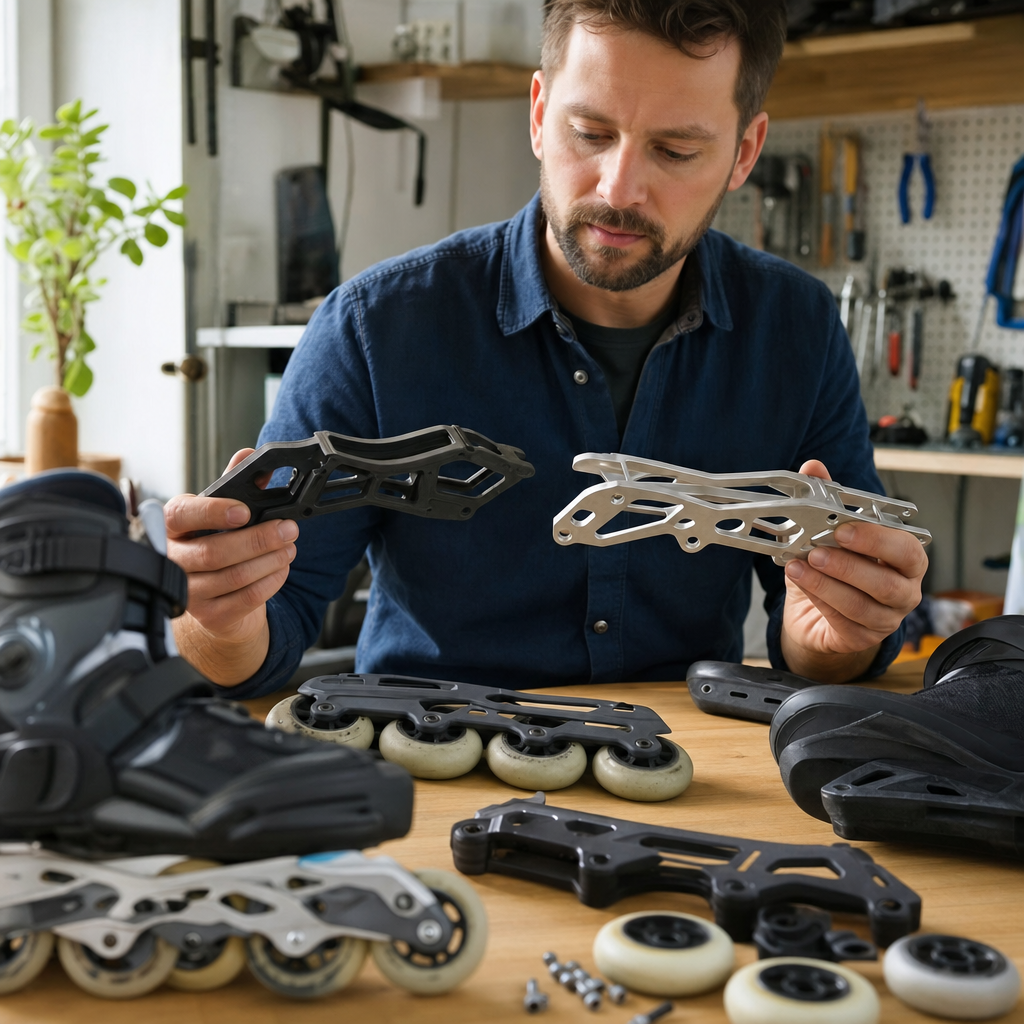
Bearings handle smooth rotation, but the frame determines how securely the wheels sit beneath the boot and how accurately your push-off transfers to the surface. The type of inline skate frame therefore affects not only speed, but also stability, vibration and handling.
A plastic or composite frame tends to give a softer response. This need not be a disadvantage for recreational skating: it can feel more comfortable on ordinary pavements, be more forgiving of less polished technique and be sufficient for a beginner at a relaxed pace. If you skate a few times a month and are still building confidence when braking or turning, the stiffest option need not be your first priority.
An aluminium inline skate frame makes more sense when you want a quicker response on push-off, more precise wheel guidance and a sportier feel on a longer route. A fitness skater maintaining pace on a cycle path may appreciate that less energy is lost to frame flex. On rougher surfaces, however, a stiffer frame does not automatically mean a more comfortable ride, because it filters out less vibration.
Recreational skating on pavements: plastic or composite can be a sensible compromise between comfort and easy handling.
Fitness skating and longer routes: aluminium can provide a more precise response and better power transfer.
Larger wheels or a longer frame: can help with pace, but they also change turning and the sense of stability, so assess them together.
When deciding between an aluminium or plastic inline skate frame, do not look for a universally “better” material. Check whether the frame works with the boot, wheels and your ability level. If your foot is not held securely in the skate, even a good frame will not provide safe control.
The right inline skate size: comfort must not mean looseness
Even a well-chosen frame and wheels will not help if your foot is not held securely in the skate. Getting the right inline skate size is not the same as choosing comfortable trainers: when pushing off, braking and turning, you need an immediate response, not delayed foot movement inside the boot.
Measure your feet. Stand with your heel against a wall, mark your longest toe and measure both feet. If you normally wear one shoe size, use it only as a guide. Choose your inline skate size according to foot length and the size chart for the specific model.
Check heel hold. Once fastened, your heel should not lift noticeably or move from side to side. If it moves, you lose precision and confidence, even if the boot initially feels comfortable.
Leave reasonable room for your toes. Your toes should not be painfully compressed, but the skate should not be loose either. Too much extra room lets the foot move around and delays the skate’s response.
Pay attention to the fastening system. Laces, an instep strap and an upper buckle help keep the ankle stable. For a beginner’s first skates, it is also practical to check for a brake and whether the fastening system suits you.
When trying skates on, stand with your knees slightly bent, as you would when skating. If the skate holds your heel, your ankle is stable and your toes have only an appropriate amount of room, you can compare the product listing using the specifications covered above.
Checklist before comparing catalogue offers
Once you know how a skate should fit, use the product listing as a checklist rather than a competition for the most eye-catching specifications. When considering how to choose inline skates, follow a simple order: first intended use, then technical specifications and fit, and only finally the specific offer.
Skate type: does a recreational, fitness, freeskate or sportier model suit your skating? If you want relaxed routes and to learn technique, you do not automatically need the most aggressive construction.
Wheels: compare both diameter and hardness for the surface. For learning and control, more manageable wheels can make sense. For longer smooth routes, you may look for a faster feel. Consider hardness in terms of comfort, vibration and grip.
Bearings: treat them as part of the whole. Do not overestimate the rating alone, and consider inline skate bearing and wheel maintenance, cleaning and the possible replacement of consumable parts.
Frame: assess a plastic, composite or aluminium frame together with the boot and wheel size. Ask yourself whether you want more cushioning and a calmer feel, or a more precise response.
Size and fit: check the size chart for the specific model, foot length, heel hold, toe room, fastening system and, for your first skates, the presence of a brake. The right inline skate size should be secure, not loose.
If a model does not pass this filter, a good-looking design or prominent number in the description will not save it. If it does, it makes sense to compare current prices, availability, retailers and offers in the Zoneo catalogue. First choose a configuration that suits your skating, then consider the specific offer.