
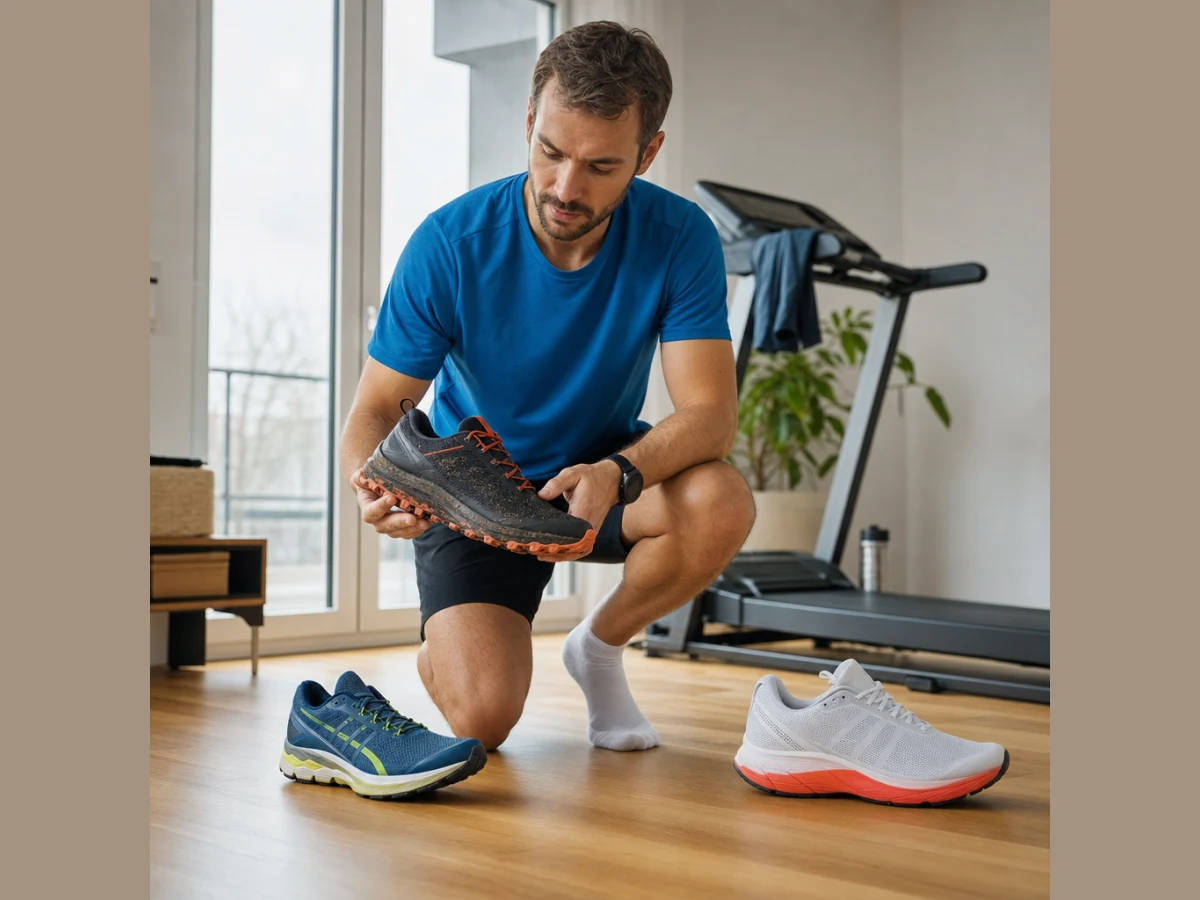
For your first pair of running shoes, the logo and colour matter less than the surface you will use for most of your training. Road, forest tracks and treadmill running each place different demands on your shoes. This guide will quickly show you when a road model is enough, when trail shoes start to make sense and how to choose a pair that is not an unnecessary compromise.
First, one practical question: where will you do most of your training runs?
When buying your first pair, do not base your choice on an occasional weekend run, but on where you will do most of your training. A simple rule works when choosing running shoes by surface: choose for the ground you will run on for around 70 to 80% of your runs. That is where you will soon find out whether a shoe suits you or is just a compromise.
Road, pavement, cycle path or treadmill: start with road models. They are often enough for beginners, even if you occasionally run in a dry park or on compacted gravel.
Forest tracks, wet gravel, roots, rocks and uneven terrain: trail shoes with better grip and more secure foot support make more sense here.
Running split between two surfaces: if it is almost an even split, choose based on the more demanding surface or the one where safety and confidence in your footing matter more.
A common mistake is buying shoes for an exceptional scenario rather than a typical week. So if you are wondering how to choose running shoes, first answer honestly where you will run most often. Only then does it make sense to consider cushioning, drop and other details.
How road, trail and treadmill running shoes really differ
Once you know your main surface, it is easier to understand why one shoe does not work equally well everywhere. The difference between road shoes, trail shoes and models suitable for a treadmill is not just the look of the outsole. Each type is designed for a different contact with the ground and a different feel underfoot.
Outsole and grip: road models usually have a smoother, more continuous outsole for roads and pavements. Trail shoes have more pronounced lugs for gravel, dirt and wetter terrain. You do not need an aggressive tread for a treadmill. It would only slow your stride unnecessarily.
Cushioning and foot strike: on the road, the focus is more on comfort during repeated impacts. Trail shoes balance softness with stability and control so your foot does not move around on roots or rocks. On a treadmill, a comfortable road-shoe feel is often enough.
Stability and protection: off-road, lateral foot support, torsional stiffness and toe or underfoot protection matter more. On the road and treadmill, a smooth transition from landing to toe-off and a comfortable heel fit tend to matter more.
Breathability and weight: at the gym, you will appreciate a more breathable upper, while trail running calls more for durable material and a more secure hold around the foot.
The wrong choice becomes obvious quickly: trail shoes can feel hard and clumsy on tarmac, while smooth road shoes can lead to uncertain footing and slipping off-road. When choosing, look beyond the design and focus mainly on the surface the shoe will need to handle most often.
For roads and pavements: what to look for in your first pair
If your first filter points to roads, pavements or cycle paths, look mainly for a smooth stride, suitable cushioning and confidence on hard ground. For road running shoes, a smoother outsole without pronounced lugs usually works well, as it does not unnecessarily hinder your stride and feels more secure on even surfaces. It is also important that the shoe does not feel cumbersome or wobble unnecessarily with every step.
For a beginner running recreationally 2 to 3 times a week, moderate cushioning is usually the most practical choice. A very soft model may feel pleasant at first, but often offers less confidence on longer runs. A shoe that is too firm will only emphasise the hardness of the impact. If you are choosing running shoes for tarmac, look for a balanced feel rather than an extremely soft or race-firm model.
If you alternate between town, parks and surfaced paths, a more versatile road shoe will often be all you need. A more stable road model makes sense if you feel unsteady when landing, your heel is less secure or your form deteriorates quickly with fatigue. You do not need aggressive trail features for ordinary dry, surfaced ground — they are more likely to reduce comfort than solve anything in practice.
Into the woods and off-road: when you need trail shoes
When level ground turns into uneven terrain, it is no longer only about comfort but also grip and control. A dry forest track or compacted gravel does not automatically mean you need trail running shoes. If the surface is relatively level, dry and without steep descents, a more secure road model can often handle it. Trail shoes start to make clear sense when the surface becomes unpredictable.
More pronounced outsole: the lugs bite better into dirt, gravel, wet leaves and mud.
A more secure fit around the foot: reduces the feeling that your foot is moving around inside the shoe on uneven terrain.
A more stable platform and less twisting: help on roots, rocks and descents.
Toe or underfoot protection: you will appreciate it where an ordinary soft road shoe no longer forgives an inaccurate step.
The wetter, rockier and more technical the terrain, the less well a soft road shoe works. However, a more aggressive trail shoe is not always better. If you still do most of your runs on tarmac, it will be unnecessarily hard, noisy and less smooth on the road. Choose trail running shoes for the actual surface, not because you assume trail shoes must handle everything.
For the treadmill: when a road model is enough
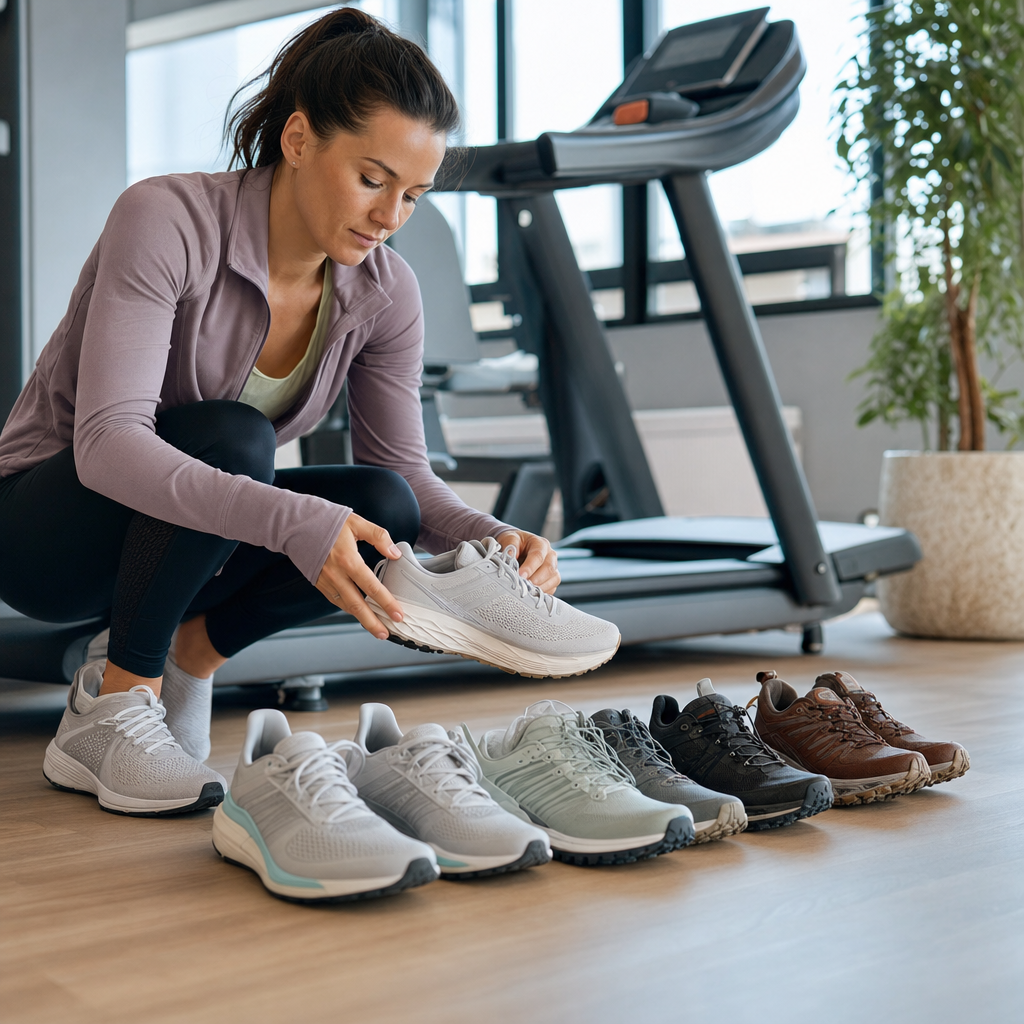
Choosing shoes for a treadmill is usually simpler. Most beginners do not need a separate footwear category. If you are deciding which shoes to choose for treadmill running, a comfortable road model with a breathable upper, natural foot strike and no unnecessarily aggressive outsole is enough in most cases. A treadmill is predictable, level and usually softer than tarmac, so pronounced grip and robust underfoot protection offer little benefit here.
Indoors, ventilation and comfort matter more than off-road features.
If you alternate between the gym and outdoor tarmac, one pair of road shoes is a perfectly sensible solution for a beginner.
Treadmill shoes should not simply be worn-out trainers — a worn outsole and tired cushioning will show indoors too.
For treadmill running, you therefore usually do not need a specialist model, but well-fitting running shoes. Not random casual trainers or old training shoes, especially if you run regularly rather than simply using the treadmill for a short warm-up.
Cushioning, drop, stability: what really matters when buying your first pair
Once you have chosen the basic category, technical specifications only refine the choice. For your first pair, the surface, shoe fit and overall running feel matter more than extremes on paper. It is therefore worth staying in the middle rather than being drawn in by what merely sounds sporty.
Cushioning: if you are deciding how much cushioning to choose in running shoes, a middle ground is usually the safest option for beginners. Cushioning should soften impact, not make your stride unstable. Very soft foam can feel pleasant at first, but often reduces confidence when you are tired or on uneven ground.
Drop: running shoe drop is the difference in height between the heel and forefoot. A higher drop often suits runners who land on their heel better, while a lower drop feels more natural and closer to the ground. When buying your first pair, however, there is no need to go for either an extremely low or extremely high drop.
Stability: a neutral model is enough for many recreational runners. Consider support more if your foot rolls inwards on landing, your heel does not feel secure in the shoe or your form breaks down quickly on longer runs.
Flexibility and torsional stiffness: on roads and treadmills, a shoe that flexes smoothly at the forefoot is usually comfortable. Off-road, less side-to-side twisting helps more because the shoe controls the foot better on roots, rocks and gravel.
Weight and technologies: a lighter model may feel quicker, but it guarantees nothing on its own. Treat different foams and marketing names as the final filter, after surface, shoe fit and the overall running feel.
If you are choosing between two pairs, prioritise confidence in your stride and comfort over the list of technologies. For a beginner, this is usually the more reliable filter.
Is one pair enough, or is a compromise no longer worthwhile?
The idea of one versatile pair is appealing and often practical for a first purchase. However, it only works while you do not expect one shoe to handle two markedly different surfaces equally well. This is where it becomes clear that a compromise between road and trail shoes is not always beneficial.
Do you run on tarmac or pavements 2 to 3 times a week? One pair of road shoes is generally the most sensible choice. It makes it easier to find comfort, a smooth stride and suitable cushioning.
Do you alternate between tarmac, parks and surfaced paths? A more versatile road shoe with a more secure outsole and without an overly soft feel often works well.
Do you run in town during the week and occasionally head onto a dry forest track? If off-road terrain is only an occasional addition, smooth and free of mud or rocks, you do not yet need an aggressive trail model.
Do you train only at the gym, or alternate between the treadmill and tarmac? Prioritise a road shoe. You do not need a separate pair for the treadmill if the same model suits you outdoors too.
Two pairs start to make sense when you regularly split your running between tarmac and genuine off-road terrain with roots, wet ground, gravel or steeper descents. A road shoe loses confidence there, while a trail shoe is unnecessarily hard, noisy and less natural on the road. It is not just about comfort, but also stride control and more sensible shoe wear.
A simple rule: if the second surface is only occasional and undemanding, one more versatile road pair is often enough. If both surfaces are regular and one is more technical, two models are usually the better solution.
How to tell whether a shoe really fits you
Even the right shoe category will not solve anything if the shoe does not fit your foot. When you first try it on, do not look only for softness. It matters more whether the shoe fits securely, does not pinch anywhere and feels natural in motion. When choosing running shoes, fit is often more important than small differences in technical specifications.
Room at the toe: your toes should not hit the front, especially when finishing a run or running downhill. At the same time, the shoe must not feel so loose that your foot moves around inside it.
A secure heel: your heel should stay in place without significant slipping. If it lifts when walking or during a short jog, it will be even more noticeable while running.
A secure midfoot: the shoe should fit securely but not aggressively. Pressure, burning, tingling or a sharp seam are warning signs even in the shop.
Try them in motion: wear the socks you actually run in, try shoes on later in the day if possible and do not rely only on standing in front of a mirror. Take a few brisk steps, jog lightly or at least mimic your toe-off.
The right feel is stable and smooth. If you already have to overlook something when trying a shoe on, it will usually not improve on an actual run but become more noticeable.
What to avoid when buying your first pair and how to narrow the choice to 2 to 3 models
Finally, simplify your choice. When buying a first pair, the most common problem is not the wrong brand but the wrong brief: choosing shoes based on appearance, someone else's review or the idea that one model must handle absolutely everything.
Do not buy with your eyes. Neither the design nor logo tells you whether a shoe is suitable for tarmac, a treadmill or off-road terrain.
Avoid extremes. An aggressive trail shoe for the road is usually unnecessarily hard and noisy, while a smooth road shoe for wet terrain is uncertain. Very soft cushioning is not automatically better for beginners either.
Do not overestimate versatility. One pair works only when your surfaces are not markedly different and the compromise does not reduce confidence in your stride.
Do not ignore warning signs. Pressure at the toes, heel slippage or an uncertain foot strike will not usually disappear on their own when running.
If you want to narrow down your choice practically, once you have decided on the category, browse the current range of running shoes and keep only the models that match your surface and how they feel on your feet.
Identify the surface on which you will do most of your training runs.
Choose the appropriate category.
Narrow down the choice by suitable cushioning and stability.
Keep 2 to 3 models that fit you from the first few steps.
Fit has the final say. Between two similar models, the better option for a beginner is the one in which your stride feels more natural, more secure and free of reservations from the first few steps.