

The sun is shining at the top of the slope, but after a few runs the piste is covered by cloud and snowfall. Can one pair work as a fixed compromise for the whole day, or would a model with a stated photochromic range or an interchangeable system be more practical? Three things are decisive: the visibility you encounter most often, how frequently conditions change and your willingness to handle lenses. The following comparison shows how to turn these into a check of the category, VLT and details of a specific model.
S1, S2, S3 and VLT are not four names for the same specification
Before assigning S1, S2 and S3 ratings to particular weather, separate three pieces of information. The category is a brief classification of a specific lens; VLT expresses the proportion of visible light the lens transmits; the stated range describes what the manufacturer specifies for a given model or variant.
VLT follows a simple rule of thumb: a higher stated value means greater transmission, while a lower value means less. S1 to S3 are categories linked to VLT ranges, not another unit of measurement. Transmission decreases qualitatively as you move from S1 to S3. The S rating therefore summarises the specification in a category, whereas VLT is a more specific value stated for the lens concerned.
In simple terms, you can compare a fixed lens marked with one category against a photochromic model whose product page states a range of categories or VLT values. Such a range applies to a specific model. Do not transfer it to other photochromic ski goggles or between similarly named variants.
On the product page, therefore look separately for:
- the category of the fitted or supplied lens,
- the VLT of the specific lens, if stated by the manufacturer,
- the stated range of a model that is not specified by one category alone.
If one specification is missing, the others do not automatically replace it. Exact percentage thresholds between S1, S2 and S3 should be verified in an appropriate standards or regulatory source before publication and cited when first explained. Without such a source, they cannot be presented as a reliable fact. With this distinction in place, the same information can be used for two opposite situations on the slope.
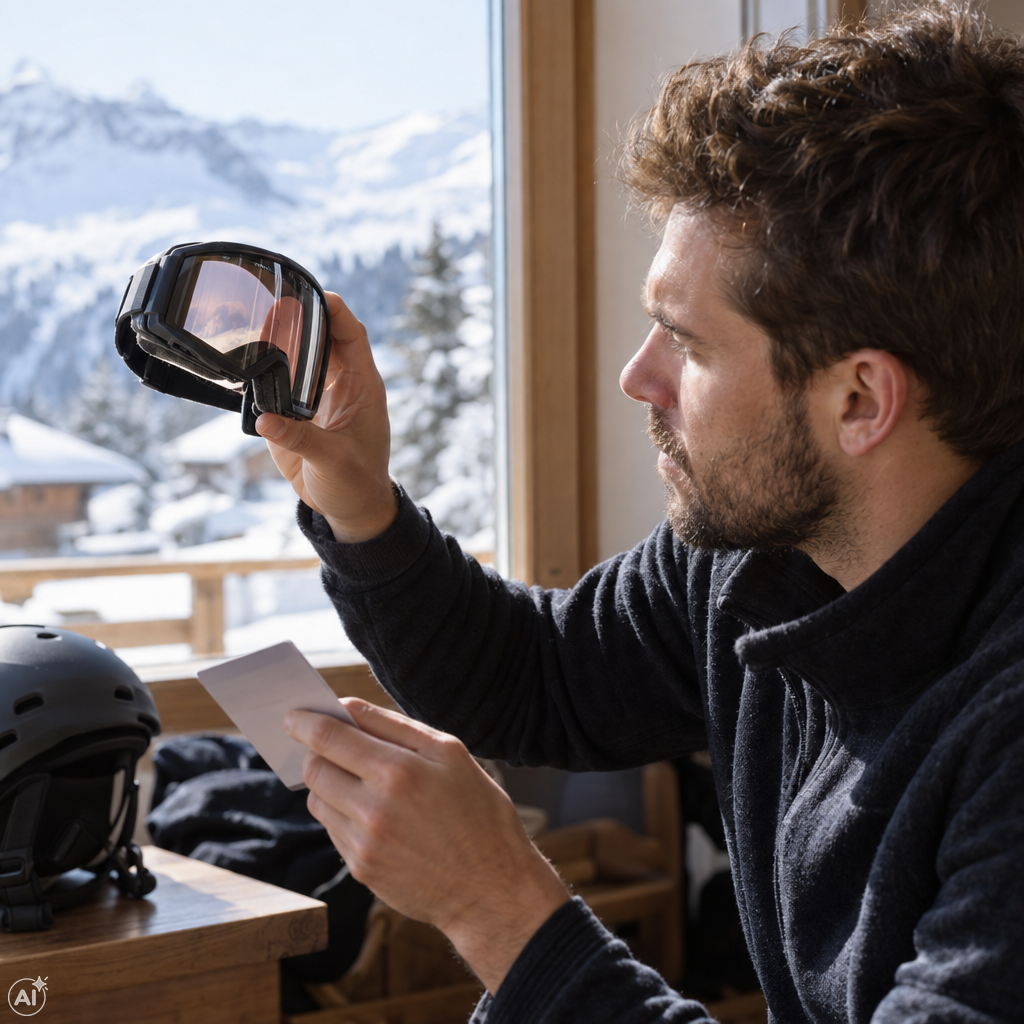
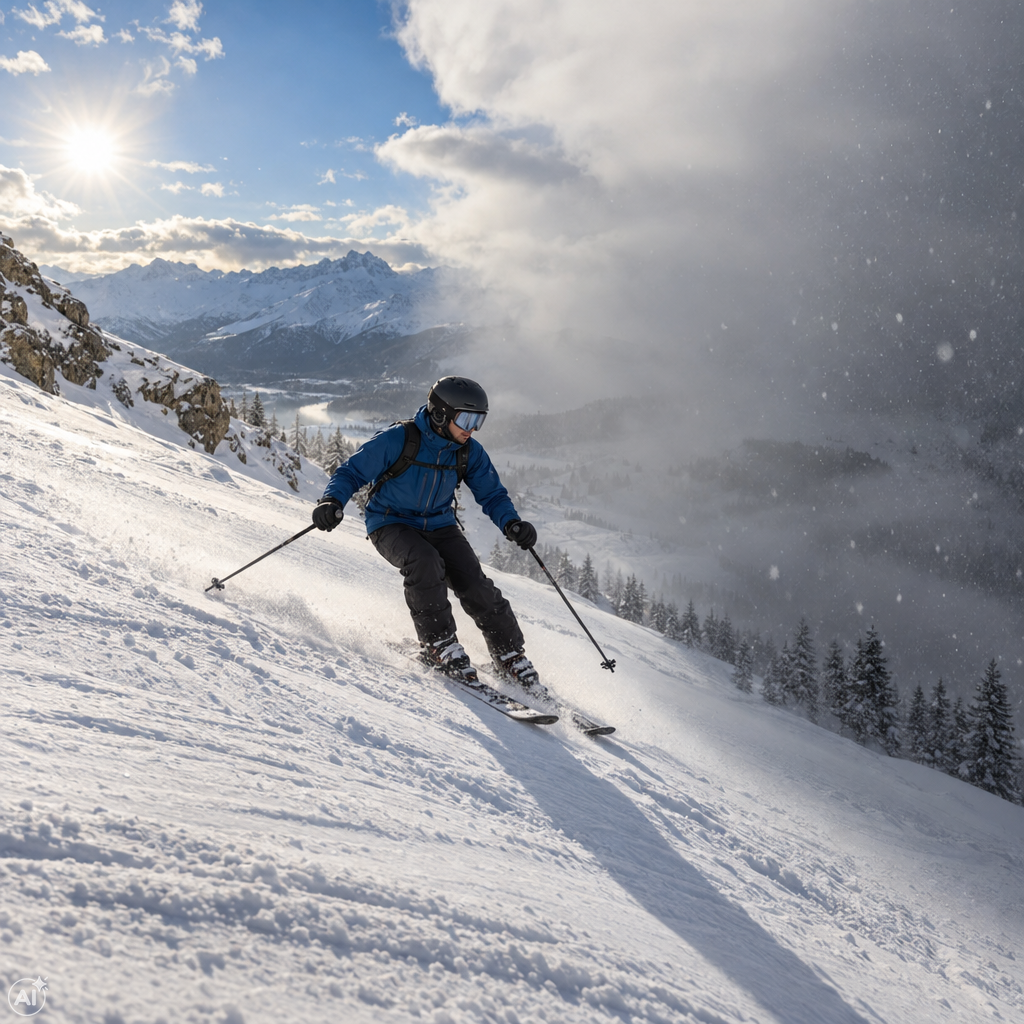
Two extreme scenarios: fog with snowfall and bright sunshine
On an open, sunny section, you are dealing with strong light; after entering an overcast, snowy section, with poor visibility. In both situations, start the same way: check the manufacturer’s intended use, the stated category and the VLT of the specific lens. Without an approved expert source, however, fog, snowfall or sunshine cannot be assigned a particular S rating as a general rule.
Fog and snowfall: colour is only a secondary clue
If you are looking for ski goggles for fog and snowfall, first check the documentation to see whether the manufacturer expressly designates that variant for low visibility. Then compare this intended use with its category and VLT. If the product page offers only a photograph, tint name or vague description, essential information is missing. A lens’s suitability cannot be reliably inferred from its appearance alone.
Treat a yellow, orange or pink tint as no more than a secondary guide between variants. By itself, it is neither a guarantee of better contrast nor an answer to which lenses to choose for skiing in snowfall. Assess colour only alongside the stated specifications and description of the specific lens; it should not replace VLT or an intended use for particular light conditions.
Bright sunshine: a darker appearance does not mean all-round suitability
Use the same logic in strong light: look for the stated intended use in these conditions and check both the category and VLT of the lens concerned. When asking which lens category is suitable for skiing in sunshine, do not rely on a photograph or the impression that the darkest lens must automatically be best. It only makes sense to choose a specific S rating when the manufacturer links it to the expected conditions for that variant.
Think about the rest of the day too. A lens chosen for an open sunny slope may be too narrowly focused after entering shade or when the weather changes; the same issue occurs in reverse with a lens chosen solely for a snowy, overcast section. Assess three factors together: the dominant visibility, the extent of expected transitions and the lens’s usability after leaving the conditions for which it is specified.
These extremes do not determine one winner. They show the limits of a narrowly focused choice and raise a more practical question: what should you choose if most of the day falls into neither?
When conditions are not extreme: does a fixed compromise make sense?
Imagine a day of stable cloud cover, when the piste brightens only briefly on an open section and darkens again in the shade. If you are not spending long periods in either bright light or very poor visibility, one fixed lens can be a sensible compromise. This does not mean optimal vision in every weather condition, but an acceptable option for the prevailing conditions.
The benefit is simplicity: you do not need to carry another lens or deal with changing lenses during the day. The trade-off is fixed transmission. If a short brighter spell turns into prolonged snowfall or dense cloud, the lens will not adapt itself to the new conditions.
A simple question helps: is only the nature of the piste changing, or are the light conditions changing substantially? In the first case, ski goggles for mixed conditions with one fixed lens may meet the need for simplicity. In the second, the requirement for one pair of ski goggles for both sunshine and fog pushes a fixed lens beyond the limits of a sensible compromise.
Do not make the shortcut that “compromise equals S2”. A fixed lens category is a specification of a particular variant, while compromise is a way of using it. What matters is the stated category, VLT and manufacturer’s intended use in relation to the conditions that genuinely prevail for you. With frequent or substantial changes, more flexible solutions need comparing.
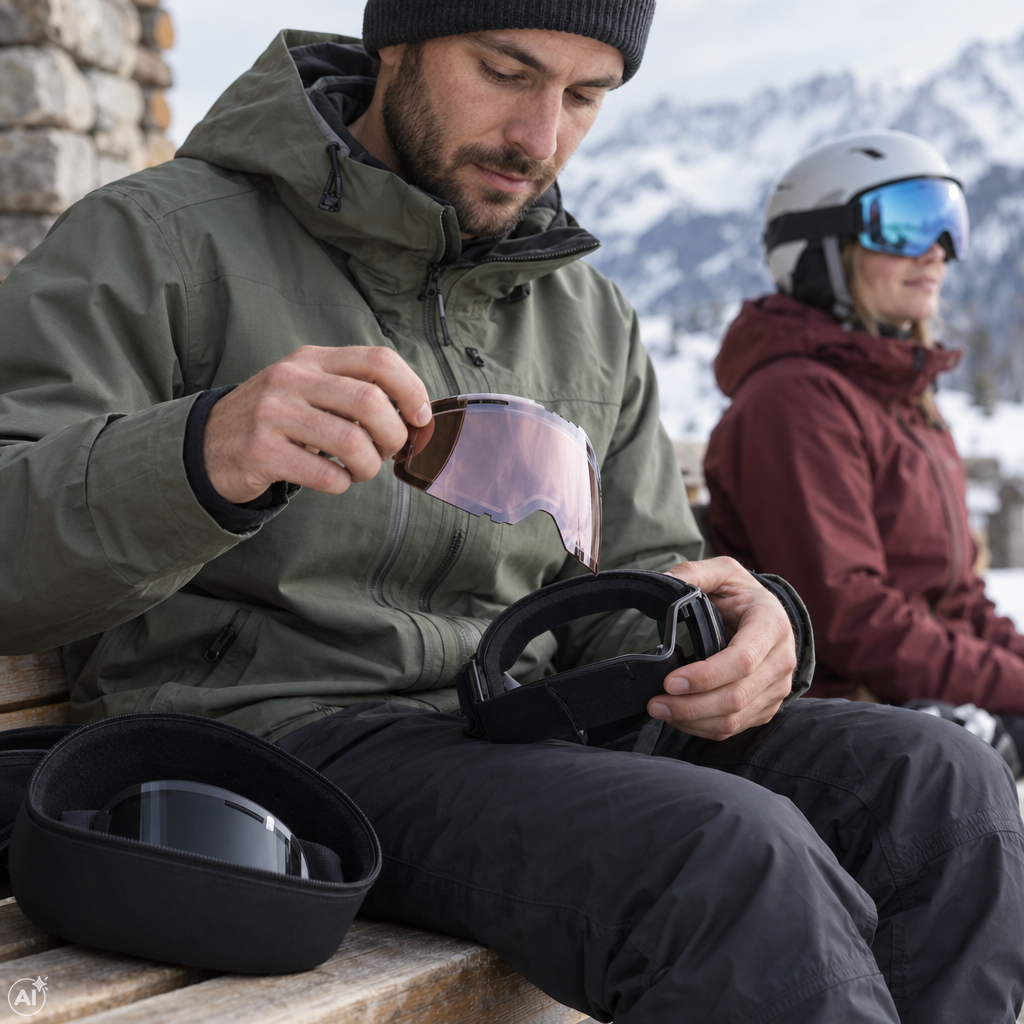
Photochromic or interchangeable lenses: convenience versus direct control
When conditions change too substantially for a fixed compromise, two different routes remain. With a photochromic model, assess the range the manufacturer states for the specific variant; with an interchangeable system, you decide which lens is fitted yourself. Neither a more broadly described range nor the option to change lenses alone determines the better choice.
If the manufacturer states that the model’s transmission adapts to light conditions, verify that claim and the stated range in its documentation. Without an approved expert source, it cannot be generalised to all photochromic lenses. With an interchangeable solution, the trade-off is different: direct choice requires having a suitable spare lens with you and time to change it.
Photochromic and interchangeable lenses by usage
| Decision factor | Photochromic lens | Interchangeable lenses |
|---|---|---|
| Frequency of changes | Check for frequent transitions; the stated range is decisive. | The user responds by changing lenses; more practical for a more substantial change. |
| Convenience during the day | An option for a skier who does not want to change lenses manually. | You need to stop, change the lens and store it safely. |
| Degree of direct control | The choice relies on the operation described by the manufacturer. | The user directly chooses which lens to fit. |
| Lens range information | Verify the range of the specific model. | Compare the stated specifications of each lens separately. |
| Willingness to change lenses manually | Check if you are unwilling to handle lenses. | Requires a willingness to carry and change a spare lens. |
A skier who repeatedly moves between open and overcast sections and does not want to stop because of their lenses should check the stated range of a specific photochromic model. Conversely, a skier who wants to choose the fitted lens themselves and is prepared to carry a spare should check an interchangeable system.
With interchangeable lenses, allow for stopping, handling them and safely storing the unused lens. With photochromic ski goggles for changeable weather, it is not the name of the solution itself that matters, but the range stated for the particular model. Once you have clarified this preference, you can turn it into a check of a specific offer.
Decision map: from weather to checking a specific offer
Create a three-step filter from the comparison above. Answer in this order; this avoids the broad question of whether fixed, photochromic or interchangeable lenses are “better”.
- Identify the dominant conditions. Do poor visibility, strong light or a less extreme middle ground prevail? Based on the answer, look for the stated category, VLT, intended use for light conditions or range. A tint or photograph does not replace missing information.
- Assess variability. Occasional mild transitions between an open and shaded section are a different issue from frequent or substantial changes. In the first case, a suitably specified fixed lens may remain an option; in the second, compare more flexible solutions.
- Decide whether you want to change lenses. If you do not want to carry a spare lens and stop to change it, verify the range of a specific photochromic model. If you prefer direct choice, check the interchangeable system and spare-lens compatibility.
Three micro-profiles show the resulting paths:
- Stable dominant conditions: look for a fixed lens stated for the scenario in which you ski most often.
- Frequent changes without changing lenses: check the specific photochromic range and whether it matches the expected transitions.
- Direct control: if you are prepared to carry an additional lens, check the change mechanism and exact compatibility.
Write down your own rule in one sentence: “I ski most often in ___; conditions change ___; I am willing to change lenses ___. Therefore I am looking for ___ and must confirm ___ on the product page.”
Checklist for a specific product and offer
- Lens specifications: find the stated category or photochromic range, VLT and intended use for light conditions. Do not fill in missing information from the name, colour or photograph.
- Interchangeable system: verify the changing procedure and, in the manufacturer’s documentation, the compatibility of spare lenses with the exact model and its version.
- Offer contents: check which lens or lenses are actually included and which are offered separately. Do not infer the contents from a general description of the model range.
- Retailer terms: confirm the current price, availability, delivery, delivery time and retailer terms directly with the partner retailer. The comparison service is neither the seller nor a guarantor that the offer is current.
The result should not be merely the name of a lens type, but a verifiable buying requirement. If one pair of ski goggles is to work in both sunshine and fog, every model compared must support that aim with its own stated specifications. The right path is the start of the check, not a reason to assume missing specifications or offer contents.